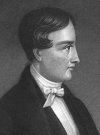
In 1543, Wishart was studying in Cambridge and apparently during that time became converted. In 1544, he determined to return to his native Scotland and preach the Gospel there. He preached for a short time at Montrose and then went on to Dundee.
While there an interesting event occurred, as he was preaching he was interrupted by one of the chief men of the town, who told him not to trouble the town any more. Wishart replied, “God is my witness, that I never minded your trouble but your comfort; yea, your trouble is more grievous to me than it is to yourselves: but I am assured to refuse God's Word, and to chase from you His messenger, shall not preserve you from trouble, but shall bring you into it: for God shall send you ministers that shall fear neither burning nor banishment. I have offered you the Word of salvation. With the hazard of my life I have remained among you; now you yourselves refuse me; and I must leave my innocence to be declared by my God. If it be long prosperous with you, I am not led by the Spirit of truth; but if unlooked-for troubles come upon you, acknowledge the cause and turn to God, who is gracious and merciful. But if you turn not at the first warning, He will visit you with fire and sword.”
He left Dundee shortly afterwards. Four days later, a severe plague broke out and many of the townspeople began to die. When Wishart heard of this he returned to Dundee, in spite of attempts by his friends to prevent it, to see if they would be more responsive. They were, and many were then converted.
An attempt was made on his life there, by a priest who had a dagger concealed under his cloak. He was waiting for Wishart at the bottom of the pulpit after he had finished his sermon, but as Wishart went to him and grabbed the dagger that was in his hand but still hidden in his sleeves as he said, “My friend, what would you have.” The priest was startled and confessed his intentions. Wishart then had to intercede on his behalf as the people wanted to kill him.
Later a letter was sent to him as he was in another place to lure him into a trap. He began to go, but shortly said, “I will not go; I am forbidden of God; I am assured there is treason. Let some of you go to yonder place, and tell me what you find.” They went and discovered the plot. He then told them that while he would die by Cardinal Beaton’s hand it would not be in this manner.
Shortly before his martyrdom, he was heard by two of his friends to be praying one night very fervently. They asked him about it and he told them that his warfare was nearing it’s end, and asked them to pray that he might not shrink from it in the end.
He was burned at the stake on March 1, 1546, but shortly before this was done he saw Cardinal Beaton, watching the proceedings from the top of the castle, and told one nearby that he who was so at ease now would soon, be cast down ignominiously. This shortly came to pass.
Tuesday, February 27, 2007


Saturday, February 24, 2007
The Rock
Here's a song that I just wrote. I recorded it on my mp3 player (Thanks again to all you who chipped in to buy it for me). The recording is now being uploaded to my multiply site. Please let me know what you think... the quality isn't the best.
G C G D
Moses struck and water flowed,
G C G D em
Showing forth Your very blood,
C G D
That You gave on that tree,
Em C G D
Flowing forth to cover me,
G C D
And supply my deepest needs
Chorus:
G-em-C-D G-em-C-D
You, You are my Rock, (Echo)
G-em-C-D G-em-C-D
You, You are my strength, (Echo)
G-em-C-D G-em-C-D
You, You are my hope, (Echo)
G-em-C-D G-em-C-D
You, You are my everything
G C G D
A sacrifice once for all,
G C G D em
Saving grace to all who call,
C G D
No more struck now you live,
Em C G D
Intercession for us You give,
G C D
To do a work in our lives
G C G D
A hiding place from the wind,
G C G D em
As I’m hidden in Your hand,
C G D
The tempest rages around,
Em C G D
But in Your presence I am found,
G C D
In Jesus my all in all
G C G D
Moses struck and water flowed,
G C G D em
Showing forth Your very blood,
C G D
That You gave on that tree,
Em C G D
Flowing forth to cover me,
G C D
And supply my deepest needs
Chorus:
G-em-C-D G-em-C-D
You, You are my Rock, (Echo)
G-em-C-D G-em-C-D
You, You are my strength, (Echo)
G-em-C-D G-em-C-D
You, You are my hope, (Echo)
G-em-C-D G-em-C-D
You, You are my everything
G C G D
A sacrifice once for all,
G C G D em
Saving grace to all who call,
C G D
No more struck now you live,
Em C G D
Intercession for us You give,
G C D
To do a work in our lives
G C G D
A hiding place from the wind,
G C G D em
As I’m hidden in Your hand,
C G D
The tempest rages around,
Em C G D
But in Your presence I am found,
G C D
In Jesus my all in all
The Labourers in the vineyard ( Matthew 20:1-17)
Here’s just a few thoughts I was having on this parable.
There are three main interpretations of this parable which are valid.
The first one is comparing the various times in which one comes to the knowledge of Christ, and if they diligently work for Him, whether it be in youth or old age, if they are faithful from that time forward they are rewarded.
The second one compares the times to dispensations in the gospel, the first being with John the Baptist, going on to the day of Pentecost. In one sense this is a valid application, for while some were called of God during the time of John (like Andrew and John), others came later in Christ’s ministry. (James and Jude, the brothers of the Lord, in all likelihood only became disciples after the resurrection). However, at Pentecost all who had faithfully laboured, and waited in the upper room received the same blessing of the Holy Spirit.
The third one is the one I was thinking about recently, and is the one that I would like to apply to our lives today. I believe that in some ways we are in this parable now. Some of us are labouring in the vineyard of God and are waiting earnestly for God to send the revival He has promised and to see the reward for our labours.
It is interesting when you read of revivals in the past that often some of the people who prayed the hardest to see the move of God oppose it when it comes. Why? Because they see God promoting people who did not labour as they did. V12 “Saying, These last have done only one hour's work, and you have made them equal to us, who have undergone the hard work of the day and the burning heat.”
Right now we are still in the heat of the day, and God’s Word and standards are being reviled in the world, but the day will come as the Gospel works that multitudes will rush into the Kingdom. When that happens, many will be raised up who did not struggle as we have had to for the glory, and when we see that it might stumble some of us to grumble like those in the parable. “Lord, How can you reward that person, I bore the hard work, he has just sprung up overnight.”
To counteract this remember 2 things:
1. It is God’s vineyard. He can do what He wants in His vineyard. The important thing is not who He uses, but that He gets His harvest in. Amen!
2. God’s acceptance of others is not His rejection of us. He will faithfully reward us what is our due. If we are thankful for what God has given us, we won’t have a problem with what He gives others.
Anyway those were just the thoughts I had, may God grant that we all are faithful and cheerful labourers in His glorious vineyard.
There are three main interpretations of this parable which are valid.
The first one is comparing the various times in which one comes to the knowledge of Christ, and if they diligently work for Him, whether it be in youth or old age, if they are faithful from that time forward they are rewarded.
The second one compares the times to dispensations in the gospel, the first being with John the Baptist, going on to the day of Pentecost. In one sense this is a valid application, for while some were called of God during the time of John (like Andrew and John), others came later in Christ’s ministry. (James and Jude, the brothers of the Lord, in all likelihood only became disciples after the resurrection). However, at Pentecost all who had faithfully laboured, and waited in the upper room received the same blessing of the Holy Spirit.
The third one is the one I was thinking about recently, and is the one that I would like to apply to our lives today. I believe that in some ways we are in this parable now. Some of us are labouring in the vineyard of God and are waiting earnestly for God to send the revival He has promised and to see the reward for our labours.
It is interesting when you read of revivals in the past that often some of the people who prayed the hardest to see the move of God oppose it when it comes. Why? Because they see God promoting people who did not labour as they did. V12 “Saying, These last have done only one hour's work, and you have made them equal to us, who have undergone the hard work of the day and the burning heat.”
Right now we are still in the heat of the day, and God’s Word and standards are being reviled in the world, but the day will come as the Gospel works that multitudes will rush into the Kingdom. When that happens, many will be raised up who did not struggle as we have had to for the glory, and when we see that it might stumble some of us to grumble like those in the parable. “Lord, How can you reward that person, I bore the hard work, he has just sprung up overnight.”
To counteract this remember 2 things:
1. It is God’s vineyard. He can do what He wants in His vineyard. The important thing is not who He uses, but that He gets His harvest in. Amen!
2. God’s acceptance of others is not His rejection of us. He will faithfully reward us what is our due. If we are thankful for what God has given us, we won’t have a problem with what He gives others.
Anyway those were just the thoughts I had, may God grant that we all are faithful and cheerful labourers in His glorious vineyard.
The Labourers in the vineyard ( Matthew 20:1-17)
Here’s just a few thoughts I was having on this parable.
There are three main interpretations of this parable which are valid.
The first one is comparing the various times in which one comes to the knowledge of Christ, and if they diligently work for Him, whether it be in youth or old age, if they are faithful from that time forward they are rewarded.
The second one compares the times to dispensations in the gospel, the first being with John the Baptist, going on to the day of Pentecost. In one sense this is a valid application, for while some were called of God during the time of John (like Andrew and John), others came later in Christ’s ministry. (James and Jude, the brothers of the Lord, in all likelihood only became disciples after the resurrection). However, at Pentecost all who had faithfully laboured, and waited in the upper room received the same blessing of the Holy Spirit.
The third one is the one I was thinking about recently, and is the one that I would like to apply to our lives today. I believe that in some ways we are in this parable now. Some of us are labouring in the vineyard of God and are waiting earnestly for God to send the revival He has promised and to see the reward for our labours.
It is interesting when you read of revivals in the past that often some of the people who prayed the hardest to see the move of God oppose it when it comes. Why? Because they see God promoting people who did not labour as they did. V12 “Saying, These last have done only one hour's work, and you have made them equal to us, who have undergone the hard work of the day and the burning heat.”
Right now we are still in the heat of the day, and God’s Word and standards are being reviled in the world, but the day will come as the Gospel works that multitudes will rush into the Kingdom. When that happens, many will be raised up who did not struggle as we have had to for the glory, and when we see that it might stumble some of us to grumble like those in the parable. “Lord, How can you reward that person, I bore the hard work, he has just sprung up overnight.”
To counteract this remember 2 things:
1. It is God’s vineyard. He can do what He wants in His vineyard. The important thing is not who He uses, but that He gets His harvest in. Amen!
2. God’s acceptance of others is not His rejection of us. He will faithfully reward us what is our due. If we are thankful for what God has given us, we won’t have a problem with what He gives others.
Anyway those were just the thoughts I had, may God grat that we all are faithful and cheerful labourers in His glorious vineyard.
There are three main interpretations of this parable which are valid.
The first one is comparing the various times in which one comes to the knowledge of Christ, and if they diligently work for Him, whether it be in youth or old age, if they are faithful from that time forward they are rewarded.
The second one compares the times to dispensations in the gospel, the first being with John the Baptist, going on to the day of Pentecost. In one sense this is a valid application, for while some were called of God during the time of John (like Andrew and John), others came later in Christ’s ministry. (James and Jude, the brothers of the Lord, in all likelihood only became disciples after the resurrection). However, at Pentecost all who had faithfully laboured, and waited in the upper room received the same blessing of the Holy Spirit.
The third one is the one I was thinking about recently, and is the one that I would like to apply to our lives today. I believe that in some ways we are in this parable now. Some of us are labouring in the vineyard of God and are waiting earnestly for God to send the revival He has promised and to see the reward for our labours.
It is interesting when you read of revivals in the past that often some of the people who prayed the hardest to see the move of God oppose it when it comes. Why? Because they see God promoting people who did not labour as they did. V12 “Saying, These last have done only one hour's work, and you have made them equal to us, who have undergone the hard work of the day and the burning heat.”
Right now we are still in the heat of the day, and God’s Word and standards are being reviled in the world, but the day will come as the Gospel works that multitudes will rush into the Kingdom. When that happens, many will be raised up who did not struggle as we have had to for the glory, and when we see that it might stumble some of us to grumble like those in the parable. “Lord, How can you reward that person, I bore the hard work, he has just sprung up overnight.”
To counteract this remember 2 things:
1. It is God’s vineyard. He can do what He wants in His vineyard. The important thing is not who He uses, but that He gets His harvest in. Amen!
2. God’s acceptance of others is not His rejection of us. He will faithfully reward us what is our due. If we are thankful for what God has given us, we won’t have a problem with what He gives others.
Anyway those were just the thoughts I had, may God grat that we all are faithful and cheerful labourers in His glorious vineyard.
Blogging Again
Well, after a season of not much activity, I am blogging again. I had been hoping to be able to publish at least twice a month, but that isn’t going to be likely, however I will still see if I can come close to that.
I finished teaching Romans, it went fairly well, I think (How do you gauge it, I wasn’t listening to myself, and I only know if I covered questions that were asked, not unasked ones that students might have had.)
Mom is teaching the Comforter now, so Dad is grading papers from the previous weeks and I am helping cook. Today is a Wednesday so I have more time, because we fast lunch. We have nearly 30 students here which is good, our maximum capacity is about 34, so it is a nice size. When the Bible school first started 6 years ago, most of our students took the courses in Chichewa, only about 3 out of 30 could understand enough English to do the courses in English. Now over 10 out of the 30 in this class are able to study in English (it is so much nicer to be able to interact without an interpreter). It is also a younger class than in previous years.
It is good to see progress in all areas here since I left 4 years ago. It shows the faithfulness of God and also gives us hope for the areas that are still so needy.
Friday, January 26, 2007
The Leading of God
One thing I’ve found myself praying recently is the psalmists prayer from Psa 43:3 “Oh send out Your light and Your truth; let them lead me; let them bring me to Your holy hill, and to Your tabernacles.”
It’s a cry of the soul for the fog which obscures the way to be lifted and for the beacon which ever shines on the hill of Zion to be seen by the pilgrim travelling there. Sometimes are way is unclear, and we need to cry out to see the way through. We also need to persevere and press on. As it says in Psa 97:11, “Light is sown for the righteous, and gladness for the upright in heart.” These are crops which can take time to grow, but as we continue they will grow up and we shall see their fruit. “To the upright there arises light in the darkness.”
Since I still am unsure of what my course is after my time in Malawi and since I am still seeking God for a broader idea of His plans for me on many levels, I just want to remind myself to carry on. To be patient in well doing, as Rom. 2:5-7 speaks of. If we continue patiently in well doing we will reap glory, honour, immortality and eternal life.
This is more of a personal note to myself than anything else, but it doesn’t hurt to remind myself that no matter what happens I must do what is right, if I do God will lead me by His light. Sometimes I may not feel very hopeful, but if I abandon what is right, what hope do I have? If I do what is right, eventually I will reap both light and gladness, what a harvest!
Anyway, God bless all you readers out there. May you also reap His light as you continue in His ways.
It’s a cry of the soul for the fog which obscures the way to be lifted and for the beacon which ever shines on the hill of Zion to be seen by the pilgrim travelling there. Sometimes are way is unclear, and we need to cry out to see the way through. We also need to persevere and press on. As it says in Psa 97:11, “Light is sown for the righteous, and gladness for the upright in heart.” These are crops which can take time to grow, but as we continue they will grow up and we shall see their fruit. “To the upright there arises light in the darkness.”
Since I still am unsure of what my course is after my time in Malawi and since I am still seeking God for a broader idea of His plans for me on many levels, I just want to remind myself to carry on. To be patient in well doing, as Rom. 2:5-7 speaks of. If we continue patiently in well doing we will reap glory, honour, immortality and eternal life.
This is more of a personal note to myself than anything else, but it doesn’t hurt to remind myself that no matter what happens I must do what is right, if I do God will lead me by His light. Sometimes I may not feel very hopeful, but if I abandon what is right, what hope do I have? If I do what is right, eventually I will reap both light and gladness, what a harvest!
Anyway, God bless all you readers out there. May you also reap His light as you continue in His ways.
Sunshiny Day
Yesterday dad and I worked on afixing barbed wire to posts at the top of our wall. Most of the wall had been done already, it was just the last side that needed to get done. It was the first sunshiny day we’ve had since I got here to do it in (It isn’t called the rainy season for nothing, it’s been raining bucket-loads). It was really hot and humid and now I have a sunburn in several places (including my scalp – now that I’m almost 30 my hair doesn’t cover like it used to). It feels good to have one project out of the way though.
In spite of the rain we have only had 2 power outages so far and they were of very short duration (under 30minutes). So that’s something to be very thankful for.
Tomorrow, I will be speaking to a group of teenagers from the surrounding area, I still need to prepare for that.
In spite of the rain we have only had 2 power outages so far and they were of very short duration (under 30minutes). So that’s something to be very thankful for.
Tomorrow, I will be speaking to a group of teenagers from the surrounding area, I still need to prepare for that.
Tuesday, January 23, 2007
Columba – the Hawk turned Dove
Columba lived in the middle of the sixth century and was an Irish missionary to Scotland who personally founded the monastery at Iona, and was responsible for the founding of many monasteries in Scotland and Western Europe. Names associates with his movement include Dallan Forgaill, credited with writing “Be Thou my vision” and later missionaries including Anskar, known as the Apostle to the North, one of the first missionaries to Denmark and Sweden.
Columba means “dove” and in later life he was called “the dove.” However, he wasn’t that way in the beginning, by all accounts in his youth he was a hot-head. His missionary endeavours did not begin in the usual way, his began with a war. He had been involved in copying a book that he had borrowed from someone from another area, and after a dispute over the terms of the loan of the book, both groups got enflamed and went to war. After many people had been killed in the dispute, Columba saw the error of his way and left Ireland in self-banishment to Scotland vowing he would not return until he had seen at least as many conversions as there were casualties in the war.
He wandered somewhat in Scotland eventually establishing his abode on Iona and setting up a community there. From this place much of Scotland and even other parts of the British Isles were evangelised. Columba, himself, gained a reputation for wise counsel and apparently flowed in the prophetic office. I have read accounts of several times when he prophesied of various things to people who came to him. The most noted thing though was that he became known as a man of peace, Columba the dove.
His last day was spent transcribing the Psalms, followed by the evening devotions during which he collapsed. He died shortly afterwards with a peaceful countenance.
I think the best lesson to learn from this man is that how you start is not the most important thing, but how you end. He may have been a hot-head in his youth, but in the end he became a calming influence on those around him and his work remained and was a light to the nations for the next 200 years.
Columba means “dove” and in later life he was called “the dove.” However, he wasn’t that way in the beginning, by all accounts in his youth he was a hot-head. His missionary endeavours did not begin in the usual way, his began with a war. He had been involved in copying a book that he had borrowed from someone from another area, and after a dispute over the terms of the loan of the book, both groups got enflamed and went to war. After many people had been killed in the dispute, Columba saw the error of his way and left Ireland in self-banishment to Scotland vowing he would not return until he had seen at least as many conversions as there were casualties in the war.
He wandered somewhat in Scotland eventually establishing his abode on Iona and setting up a community there. From this place much of Scotland and even other parts of the British Isles were evangelised. Columba, himself, gained a reputation for wise counsel and apparently flowed in the prophetic office. I have read accounts of several times when he prophesied of various things to people who came to him. The most noted thing though was that he became known as a man of peace, Columba the dove.
His last day was spent transcribing the Psalms, followed by the evening devotions during which he collapsed. He died shortly afterwards with a peaceful countenance.
I think the best lesson to learn from this man is that how you start is not the most important thing, but how you end. He may have been a hot-head in his youth, but in the end he became a calming influence on those around him and his work remained and was a light to the nations for the next 200 years.
Consistency Thou Art a Jewel
The downside of having a blog is I feel guilty if I don’t write for a while… I feel like I am failing all my precious readers. Hey, if you are going to take time to look at something I wrote, then I need to ensure that I respect you and write something worth reading and write regularly enough to make it worth your while to visit.
Well, here I am in Malawi, having been a little unsettled for a few weeks it’s been hard to write. Now I hope to be able to get an article out once a week (more isn’t feasible). We’ll see how that goes, in the mean time, thanks for dropping by.
Having written this I had a very difficult time in sending it, the Internet Cafes here have such slow connections that my blogging might be very eratic… we’ll see.
Well, here I am in Malawi, having been a little unsettled for a few weeks it’s been hard to write. Now I hope to be able to get an article out once a week (more isn’t feasible). We’ll see how that goes, in the mean time, thanks for dropping by.
Having written this I had a very difficult time in sending it, the Internet Cafes here have such slow connections that my blogging might be very eratic… we’ll see.
Monday, January 01, 2007
Be Careful What You Say
I don't know if I am the only one, but sometimes when I prepare to speak I have a specific illustration that I feel to share and I just know that it's going to happen. Eg. Shortly before I left Singapore I was sharing on humility and I mentioned that one reason we should be humble is because we can't even keep ourselves from getting a cold... about a half an hour later I started getting a sore throat. I ended up about as sick as I have ever been for 2 weeks (the cough is better now, for those wondering). It's something that has happened before, there are actually some messages I dread speaking on because I don't want to experience them... on the other hand I have to speak what I feel God has, and it would be awful to speak something and not be willing to live through it.
There are sometimes I just have to say to myself as something is coming up that I just spoke about, "Well, you spoke on it, let's see if you can live it."
There are sometimes I just have to say to myself as something is coming up that I just spoke about, "Well, you spoke on it, let's see if you can live it."
Tha Faithfulness Of God
Well, since it's New Year's Eve I was thinking of writing something on the faithfulness of God... Yet another year has passed and He is still faithful. I am supposed to lead songs tonight for the watchnight service here in Erie, and I've picked out some songs on faithfulness, because I think it's one of the most important attributes of God. Imagine if God were like us, changing, unstable, mutible, we would be in trouble. God would do something for us if He were in a good mood but otherwise He wouldn't.
I love what 2 Timothy 2:13 says, "If we believe not, yet he abideth faithful: he cannot deny himself."
God's overall purposes are never dependant on us, even if we don't believe He will fulfill HIs will, He may have to use someone else, but His will will be done. He does what He has promised because He is faithful, there is no shadow of changing with Him.
This verse even reminds me of a few times in my life where I had virtually given up hope, I couldn't say that I deserved God to intervene in my life at that time or even that I would have a right to ask Him to. Yet He did, He took me and drew me and lead me in the right path. Why? Even if we falter He is still faithful. That is what He is, the essence of Himself. He is faithful through and through, He can't deny who He is.
Prone to wander, Lord, I feel it,
I love what 2 Timothy 2:13 says, "If we believe not, yet he abideth faithful: he cannot deny himself."
God's overall purposes are never dependant on us, even if we don't believe He will fulfill HIs will, He may have to use someone else, but His will will be done. He does what He has promised because He is faithful, there is no shadow of changing with Him.
This verse even reminds me of a few times in my life where I had virtually given up hope, I couldn't say that I deserved God to intervene in my life at that time or even that I would have a right to ask Him to. Yet He did, He took me and drew me and lead me in the right path. Why? Even if we falter He is still faithful. That is what He is, the essence of Himself. He is faithful through and through, He can't deny who He is.
Prone to wander, Lord, I feel it,
Prone to leave the God I love,
Here's my heart O take and seal it,
Seal it for thy courts above.
Lord in this coming year may I serve You more faithfully than ever, may You steady me in the course You have set for me and keep me faithful to You both now and forever.
Lord in this coming year may I serve You more faithfully than ever, may You steady me in the course You have set for me and keep me faithful to You both now and forever.
Saturday, December 23, 2006
Apologies to my readers
Thanks to all you guys for dropping by to read my little thoughts. I have a couple things that I will probably write on soon... maybe over Christmas.
Thanks for swinging by, your patience is greatly appreciated.
Thanks for swinging by, your patience is greatly appreciated.
Tuesday, December 12, 2006
Blessed Are The Merciful
This is just a quick thought I was having on Matthew 5:7, "Blessed are the merciful for they shall obtain mercy."
Actually it's a contrast of 2 people in similar circumstances who went down 2 different paths. They were both fighter pilots in WWI - their names were Ernst Udet and Edward Mannock.
Udet flew throughout the war and in the beginning he showed mercy to many enemy pilots. He initially would fly behind them and force them to land rather than actually shoot them down. Later this act of mercy was repaid when he was involved in a dogfight with a famous French ace. Udet's machinegun's jammed and while he was struggling to unjam them the Frenchman manouvered behind him and had him in his sights. However when he noticed his enemies predicament he broke off his attack pulled alongside Udet and saluted him before heading for home. By being merciful Udet reaped mercy.
Edward Mannock was another very adept fighter pilot who after losing a friend in combat became so filled with hatred towards the enemy, that he would not only shoot them down but would shoot the fuel tanks so that the pilots would have the choice of burning to death or jumping (without a parachute) from the burning plane. Not surprisingly, after he started to do this he began to have nightmares of himself burning to death in a plane. To counter this he began to carry a pistol on him and say that he was going to use it rather than burn to death. In the end his plane was shot down and did go down in flames, it is unknown whether or not he used his pistol.
I think these examples show that we do reap what we sow, whether for good or evil. It also shows how when someone gives themselves over to wickedness, evil spirits begin to lead them to their destruction and will even taunt them concerning their end, and if there is no repentance that's where they go.
If we must err in this life, let it be on the side of mercy.
Actually it's a contrast of 2 people in similar circumstances who went down 2 different paths. They were both fighter pilots in WWI - their names were Ernst Udet and Edward Mannock.
Udet flew throughout the war and in the beginning he showed mercy to many enemy pilots. He initially would fly behind them and force them to land rather than actually shoot them down. Later this act of mercy was repaid when he was involved in a dogfight with a famous French ace. Udet's machinegun's jammed and while he was struggling to unjam them the Frenchman manouvered behind him and had him in his sights. However when he noticed his enemies predicament he broke off his attack pulled alongside Udet and saluted him before heading for home. By being merciful Udet reaped mercy.
Edward Mannock was another very adept fighter pilot who after losing a friend in combat became so filled with hatred towards the enemy, that he would not only shoot them down but would shoot the fuel tanks so that the pilots would have the choice of burning to death or jumping (without a parachute) from the burning plane. Not surprisingly, after he started to do this he began to have nightmares of himself burning to death in a plane. To counter this he began to carry a pistol on him and say that he was going to use it rather than burn to death. In the end his plane was shot down and did go down in flames, it is unknown whether or not he used his pistol.
I think these examples show that we do reap what we sow, whether for good or evil. It also shows how when someone gives themselves over to wickedness, evil spirits begin to lead them to their destruction and will even taunt them concerning their end, and if there is no repentance that's where they go.
If we must err in this life, let it be on the side of mercy.
My Current Plans
To all my faithful readers:
Sorry I haven't blogged in a while. I feel really guilty, but I haven't had much internet access where I've been.
I'm currently staying with Pastor Dan Caram, and will be here in Erie, PA, until mid-January. I will then head to Malawi for 7-8 months. Starting mid-February I will teach Romans for a week at the Bible School there (Romans is a little beyond my depth I fear, but I'll do my best). I never really think of myself as a teacher but others are encouraging me, so maybe I am being stretched a little.
Anyway that's the news... Maybe I can write a quick article a little later...
Sorry I haven't blogged in a while. I feel really guilty, but I haven't had much internet access where I've been.
I'm currently staying with Pastor Dan Caram, and will be here in Erie, PA, until mid-January. I will then head to Malawi for 7-8 months. Starting mid-February I will teach Romans for a week at the Bible School there (Romans is a little beyond my depth I fear, but I'll do my best). I never really think of myself as a teacher but others are encouraging me, so maybe I am being stretched a little.
Anyway that's the news... Maybe I can write a quick article a little later...
Monday, November 20, 2006
What I Love About The Church
You know, when we look around at the Church as a whole sometimes we can see many things that sadden us. That can be depressing...unless you look at the Word of God.
There we see in Revelation 17:1 the unfaithful church, and in Revelation 21:9 the faithful church, the Lamb's wife. I love to take certainty in the inevibility of it. The great thing is that we know who wins. Christ will have a spotless Bride, that is unfailable, inevitable and certain. The Church can look as motley, weak and confused as anything, yet Christ will have His Bride.
False prophets can preach false doctrine and drag away souls from the true faith and yet Christ will have His own. The greater the gates of deception that are built, the greater glory God will have when they are stormed. The truth will have to be contended for as never before in the coming days, but the truth will prevail. I can take comfort in that.
Even if friends of mine veer off, or even if I were to veer off the truth would still prevail. That effects me in 2 ways: firstly, it encourages me to make sure I am on the side of truth, that I walk with God. Secondly, it means that I don't have to worry about the state of other areas of the Church, I just need to tend the area God has given me. I just need to be truthful and honest to those in my sphere of influence.
Glory to the Lamb of God!
There we see in Revelation 17:1 the unfaithful church, and in Revelation 21:9 the faithful church, the Lamb's wife. I love to take certainty in the inevibility of it. The great thing is that we know who wins. Christ will have a spotless Bride, that is unfailable, inevitable and certain. The Church can look as motley, weak and confused as anything, yet Christ will have His Bride.
False prophets can preach false doctrine and drag away souls from the true faith and yet Christ will have His own. The greater the gates of deception that are built, the greater glory God will have when they are stormed. The truth will have to be contended for as never before in the coming days, but the truth will prevail. I can take comfort in that.
Even if friends of mine veer off, or even if I were to veer off the truth would still prevail. That effects me in 2 ways: firstly, it encourages me to make sure I am on the side of truth, that I walk with God. Secondly, it means that I don't have to worry about the state of other areas of the Church, I just need to tend the area God has given me. I just need to be truthful and honest to those in my sphere of influence.
Glory to the Lamb of God!
Elias Letwaba - An Exceptional If Little-Known Man
You probably have never heard of Elias Letwaba, even though was a man of exceptional ability and character. There are several reasons for his not being well-known. Firstly, his ministry was in rural Africa, the Upper Transvaal in the first half of the twentieth century. That on its own would take him somewhat out of the lime-light. When you couple that with the fact that he was blcak and that his own denomination, the AFM, followed a policy, at that time, where non-whites were second-class members of the church it becomes even more easy to believe that he would not be well known.
He was one of John G. Lake's early converts and many believe he was the one that received Lake's mantle for healing. He is credited with over 10,000 healings and miracles during his ministry. Lake himself, wrote of one incident where a baby had a broken neck and he had no faith to see it healed, so he left so as not to rob Elias of his faith. The baby was healed, and Lake had to repent of his unbelief. He realized that his greater medical knowledge of the seriousness of the condition was actually a hindrance in this case.
He started a Bible School called Patmos Bible School in Potgietersrus, this school trained thousands of Christian workers that spread the Gospel throughout the rural areas of South Africa. It was never formally recognized as a Bible School for training Pastors, by the AFM, so most of its graduates were forced to do the ministerial work without any recognition by their denomination.
Elias was obviously a man of exceptional humility. Most people who have worked that many miracles and are doing a good work for God would have a hard time staying in a denomination that held separate baptismal services for whites and non-whites, and as a structure made it clear that the non-whites were second-class members. Yet Elias not only stayed true, but he refused to be sidetracked from what he believed his call was to dabble in politics, or fight against the racism in his denomination.
That's the thing I like best about him and why I thought he should be better known. Don't let anything sidetrack you from your call. If people are unfair, ignore it, do what God has called you to do. He's the one we are working for after all.
He was one of John G. Lake's early converts and many believe he was the one that received Lake's mantle for healing. He is credited with over 10,000 healings and miracles during his ministry. Lake himself, wrote of one incident where a baby had a broken neck and he had no faith to see it healed, so he left so as not to rob Elias of his faith. The baby was healed, and Lake had to repent of his unbelief. He realized that his greater medical knowledge of the seriousness of the condition was actually a hindrance in this case.
He started a Bible School called Patmos Bible School in Potgietersrus, this school trained thousands of Christian workers that spread the Gospel throughout the rural areas of South Africa. It was never formally recognized as a Bible School for training Pastors, by the AFM, so most of its graduates were forced to do the ministerial work without any recognition by their denomination.
Elias was obviously a man of exceptional humility. Most people who have worked that many miracles and are doing a good work for God would have a hard time staying in a denomination that held separate baptismal services for whites and non-whites, and as a structure made it clear that the non-whites were second-class members. Yet Elias not only stayed true, but he refused to be sidetracked from what he believed his call was to dabble in politics, or fight against the racism in his denomination.
That's the thing I like best about him and why I thought he should be better known. Don't let anything sidetrack you from your call. If people are unfair, ignore it, do what God has called you to do. He's the one we are working for after all.
Sunday, November 12, 2006
Is Someone Watching You?
I know you are probably thinking that you already know what this post is about. You probably think that I am going to write about God always watching you and walking in the fear of the Lord. But I won't. That is important, but in this post I want to cover 3 other groups of spectators.
In 1 Cor. 4:9, Paul says, "For I think that God hath set forth us the apostles last, as it were appointed to death: for we are made a spectacle unto the world, and to angels, and to men."
The language here has to be understood in the time of that day. Most of us today do not understand the concept of public excecution, but in the days of the Apostle Paul when a man was condemned to execution, he it was public and many people would stand and watch. The word "spectacle" meant one who's death was on display. One on who all could gaze and wonder how will this one die? Will he cry for mercy, will he be defiant, will he mock his fate? What will he do?
In another place Paul says that he was like the offscouring of the earth, like the filth that is scraped off of cooking pots and thrown away when they are washed. That was the contempt with which Paul was treated. How did he undergo this? Why did he endure it?
Part of the secret lies in the second part of our text, he was a spectacle to the world, angels, and men. He had others watching him. Firstly, he had the world, he was placed on display by God to bear witness of the truth to the world. He had to always act in a manner which showed Christ, in life or death. He had to overcome the world through his faith. He was on trial here, a trial by ordeal.
Secondly, he was being watched closely by angels, both good and fallen. Paul writes in Eph. 3:8-11, "Unto me, who am less than the least of all saints, is this grace given, that I should preach among the Gentiles the unsearchable riches of Christ; And to make all men see what is the fellowship of the mystery, which from the beginning of the world hath been hid in God, who created all things by Jesus Christ: To the intent that now unto the principalities and powers in heavenly places might be known by the church the manifold wisdom of God, According to the eternal purpose which he purposed in Christ Jesus our Lord." The Lord has an eternal controversy with His adversary. Fallen angels are greater in power and strength than man, they have a wisdom that is beyond man's as well. They should conquer us in any degree, but when we manifest the wisdom of God as Christians, God enables us to defeat them. This gives God glory and humiliates them. It reproves them for their own sin against God, which they committed without a tempter. It reproves their self-will, because here are creatures of a lower stature and weaker will yielding to God. When we trust in God and endure difficulties by God's grace, we stop the adversaries mouth. It also is part of the process that qualifies to rule in the world to come which God has not given to angels (Heb. 2:5).
Lastly we have the great cloud of witnesses looking on(Heb. 12:1). Those who have run their race are cheering us on. I think heaven will be a wonderful place. The communion of the saints will be very real there. There are some saints that by God's grace I am going to meet and thank for the impact their writings had on me, even though I never met them. I am part of their reward, and they have an interest in my race. They desire that we press further than they did, because it is part of their reward.
One day in heaven, we will see each other, and we will there know what we went through on earth was worth it. We will be able to talk of what the Lord brought us through and give thanks to God. We will be able to see our scars we received for the Gospel and remember that we followed Christ in the day of that battle.
May we all be able to rejoice on that day, because we have wholly followed the Lord. And may we hear the words, "Well done, good and faithful servant."
In 1 Cor. 4:9, Paul says, "For I think that God hath set forth us the apostles last, as it were appointed to death: for we are made a spectacle unto the world, and to angels, and to men."
The language here has to be understood in the time of that day. Most of us today do not understand the concept of public excecution, but in the days of the Apostle Paul when a man was condemned to execution, he it was public and many people would stand and watch. The word "spectacle" meant one who's death was on display. One on who all could gaze and wonder how will this one die? Will he cry for mercy, will he be defiant, will he mock his fate? What will he do?
In another place Paul says that he was like the offscouring of the earth, like the filth that is scraped off of cooking pots and thrown away when they are washed. That was the contempt with which Paul was treated. How did he undergo this? Why did he endure it?
Part of the secret lies in the second part of our text, he was a spectacle to the world, angels, and men. He had others watching him. Firstly, he had the world, he was placed on display by God to bear witness of the truth to the world. He had to always act in a manner which showed Christ, in life or death. He had to overcome the world through his faith. He was on trial here, a trial by ordeal.
Secondly, he was being watched closely by angels, both good and fallen. Paul writes in Eph. 3:8-11, "Unto me, who am less than the least of all saints, is this grace given, that I should preach among the Gentiles the unsearchable riches of Christ; And to make all men see what is the fellowship of the mystery, which from the beginning of the world hath been hid in God, who created all things by Jesus Christ: To the intent that now unto the principalities and powers in heavenly places might be known by the church the manifold wisdom of God, According to the eternal purpose which he purposed in Christ Jesus our Lord." The Lord has an eternal controversy with His adversary. Fallen angels are greater in power and strength than man, they have a wisdom that is beyond man's as well. They should conquer us in any degree, but when we manifest the wisdom of God as Christians, God enables us to defeat them. This gives God glory and humiliates them. It reproves them for their own sin against God, which they committed without a tempter. It reproves their self-will, because here are creatures of a lower stature and weaker will yielding to God. When we trust in God and endure difficulties by God's grace, we stop the adversaries mouth. It also is part of the process that qualifies to rule in the world to come which God has not given to angels (Heb. 2:5).
Lastly we have the great cloud of witnesses looking on(Heb. 12:1). Those who have run their race are cheering us on. I think heaven will be a wonderful place. The communion of the saints will be very real there. There are some saints that by God's grace I am going to meet and thank for the impact their writings had on me, even though I never met them. I am part of their reward, and they have an interest in my race. They desire that we press further than they did, because it is part of their reward.
One day in heaven, we will see each other, and we will there know what we went through on earth was worth it. We will be able to talk of what the Lord brought us through and give thanks to God. We will be able to see our scars we received for the Gospel and remember that we followed Christ in the day of that battle.
May we all be able to rejoice on that day, because we have wholly followed the Lord. And may we hear the words, "Well done, good and faithful servant."
Tuesday, November 07, 2006
Being An Ambassador
There are some people that I sincerely pity. I enjoy the study of history and once while reading a book called, "The Guns Of August" I came across a man whose situation I truly found pitiable. I fail to recollect his name, but briefly this is his story:
He was in the Prussian diplomatic corp, they posted him to Turkey, just in time for the Uprising by the Young Turks. The whole diplomatic corp had to be evacuated. Then they sent him off to China, right on schedule for The Boxer Rebellion. He had a souvenier from that one, it was an ash tray with a bullet hole in it, from when he was under seige. Then they sent him to Belgium, he liked Belgium and used to entertain his guests with stories of his adventures and end off by saying, "But this is Belgium, and nothing ever happens in Belgium." Then on August 2nd, 1914 came the fateful telegram...
It ordered our ambassador to deliver an ultimatum to Belgium, one he knew would be refused, war would be declared and yet again he would have to leave the country he was posted in. I am sure he had some reservations, it certainly would not be a duty that he relished, but he was an ambassador and that means he does not give his own opinions or feelings, but he speaks on behalf of another.
The Apostle Paul brings out the fact of our being ambassadors in 2 Cor. 5:20, "Now then we are ambassadors for Christ, as though God did beseech you by us: we pray you in Christ’s stead, be ye reconciled to God."
As ambassadors we are not at liberty to declare our own feelings, we are bound to declare what we are told by the one we represent. If we have Biblical reason to feel that God is angry with someone, we cannot tell them that they are fine and God is happy with them that is being a false ambassador. If our Prussian friend had done that, it wouldn't have helped Belgium at all, and it would have gotten him in deep trouble with his superiors.
We need to tell the world, "you are at war with God, you are God's enemies... You need to be reconciled to Him." Show them God's ultimatum.
One interesting example of an ambassador calling for surrender is found in 2 Kings 18:17-25. Now this ambassador represented the most powerful nation of his day, but he denied the power of the God of Israel and it was his undoing. But notice how he calls for surrender, he looks at every source of hope and trust the people could rely on to resist him and he discounts it.
This is somewhat like what Jonathan Edwards used to do, take every possible excuse someone has to think they are good enough to make it to heaven apart from Christ and show them its impossibility. Show them the futility of fighting God, and show them they have no option but surrender.
I recently heard a preacher giving an interview, and in that interview, when asked if those who do not believe in Jesus can go to heaven. He said, "They have no assurance of heaven."
I am sure this was done so as to sound more friendly and kind to the unsaved. But if salt doesn't sting it, it ceases to be salt. People who refuse to believe in Christ go to hell. I didn't say that He did. Telling people they are alright or have a chance without Christ is being a false ambassador. Those people will not thank you for soothing them with lies when they stand before the Judge of all.
Let's be true ambassadors. We don't have to be obnoxious about it, but firm.
He was in the Prussian diplomatic corp, they posted him to Turkey, just in time for the Uprising by the Young Turks. The whole diplomatic corp had to be evacuated. Then they sent him off to China, right on schedule for The Boxer Rebellion. He had a souvenier from that one, it was an ash tray with a bullet hole in it, from when he was under seige. Then they sent him to Belgium, he liked Belgium and used to entertain his guests with stories of his adventures and end off by saying, "But this is Belgium, and nothing ever happens in Belgium." Then on August 2nd, 1914 came the fateful telegram...
It ordered our ambassador to deliver an ultimatum to Belgium, one he knew would be refused, war would be declared and yet again he would have to leave the country he was posted in. I am sure he had some reservations, it certainly would not be a duty that he relished, but he was an ambassador and that means he does not give his own opinions or feelings, but he speaks on behalf of another.
The Apostle Paul brings out the fact of our being ambassadors in 2 Cor. 5:20, "Now then we are ambassadors for Christ, as though God did beseech you by us: we pray you in Christ’s stead, be ye reconciled to God."
As ambassadors we are not at liberty to declare our own feelings, we are bound to declare what we are told by the one we represent. If we have Biblical reason to feel that God is angry with someone, we cannot tell them that they are fine and God is happy with them that is being a false ambassador. If our Prussian friend had done that, it wouldn't have helped Belgium at all, and it would have gotten him in deep trouble with his superiors.
We need to tell the world, "you are at war with God, you are God's enemies... You need to be reconciled to Him." Show them God's ultimatum.
One interesting example of an ambassador calling for surrender is found in 2 Kings 18:17-25. Now this ambassador represented the most powerful nation of his day, but he denied the power of the God of Israel and it was his undoing. But notice how he calls for surrender, he looks at every source of hope and trust the people could rely on to resist him and he discounts it.
This is somewhat like what Jonathan Edwards used to do, take every possible excuse someone has to think they are good enough to make it to heaven apart from Christ and show them its impossibility. Show them the futility of fighting God, and show them they have no option but surrender.
I recently heard a preacher giving an interview, and in that interview, when asked if those who do not believe in Jesus can go to heaven. He said, "They have no assurance of heaven."
I am sure this was done so as to sound more friendly and kind to the unsaved. But if salt doesn't sting it, it ceases to be salt. People who refuse to believe in Christ go to hell. I didn't say that He did. Telling people they are alright or have a chance without Christ is being a false ambassador. Those people will not thank you for soothing them with lies when they stand before the Judge of all.
Let's be true ambassadors. We don't have to be obnoxious about it, but firm.
Philipp Jakob Spener - An Advocate Of Holiness
In this article I am going to briefly trace a movement and see how God can use one man to start a chain of events. In this article I am going to look a little bit at Philipp Jakob Spener and Pietism. Spener is known as the Father of Pietism, this was a movement in Germany, that was really part of a larger move of the Spirit of God calling His people to holiness and practical Christianity.
In France this movement was lead by Calvinistic Roman Catholics called Jansenists. In Germany, the Lutheran holiness movement was called Pietism, this influenced the Moravians, Zinzendorf was Spener’s god-son, who in turn influenced John Wesley and the Methodists and Alexander Mack and the Brethren.
These groups differed greatly in some respects of their theology, but what they all had in common emphasis in a need for a personal holiness and obedience to God in the daily walk of life.
Phillip Jakob Spener was born in 1635 in Upper Alsace. In 1651, he went to Strasbourg to study. After his studies he became a tutor, before visiting other universities in Basel, Tübingen, and Geneva.
He returned to Strasbourg in 1663, and became a lecturer. In 1666, He became the chief pastor of the Lutheran church in Frankfurt. Here in 1675, he wrote the work which gave Pietism its name, Pia desideria, or Earnest Desires. He underwent a lot of opposition and persecution for his beliefs. The one which apparently upset the orthodox Lutheran academics of his day most was that one needed to experience regeneration before you could truly be a theologian. The fact that this was so controversial shows something of the state of the church in Germany at this time.
In 1686 he encouraged August Hermann Franke in his dream of a Collegium Philobiblicum, in which graduates met for regular and systematic Bible study and exegesis of the Scriptures in a practical way. In 1694, he helped to found the University of Halle. In 1695, the theological faculty in Wittenburg charged him with 264 various theological errors, the disputes dragged on and ended only with his death in 1705.
His influence and the influence of Pietism lived on. It was largely responsible for George Muller’s work among orphans, as well as all the other movements I mentioned earlier.
Here are His six main proposals he made in Pia Desderia:
1. the earnest and thorough study of the Bible in private meetings, ecclesiolae in ecclesia ("a church within the church").
2. the Christian priesthood being universal, the laity should share in the spiritual government of the Church
3. a knowledge of Christianity must be attended by the practice of it as its indispensable sign and supplement
4. instead of merely didactic, and often bitter, attacks on the heterodox and unbelievers, a sympathetic and kindly treatment of them
5. a reorganization of the theological training of the universities, giving more prominence to the devotional life
6. a different style of preaching, namely, in the place of pleasing rhetoric, the implanting of Christianity in the inner or new man, the soul of which is faith, and its effects the fruits of life.
With that I close.
In France this movement was lead by Calvinistic Roman Catholics called Jansenists. In Germany, the Lutheran holiness movement was called Pietism, this influenced the Moravians, Zinzendorf was Spener’s god-son, who in turn influenced John Wesley and the Methodists and Alexander Mack and the Brethren.
These groups differed greatly in some respects of their theology, but what they all had in common emphasis in a need for a personal holiness and obedience to God in the daily walk of life.
Phillip Jakob Spener was born in 1635 in Upper Alsace. In 1651, he went to Strasbourg to study. After his studies he became a tutor, before visiting other universities in Basel, Tübingen, and Geneva.
He returned to Strasbourg in 1663, and became a lecturer. In 1666, He became the chief pastor of the Lutheran church in Frankfurt. Here in 1675, he wrote the work which gave Pietism its name, Pia desideria, or Earnest Desires. He underwent a lot of opposition and persecution for his beliefs. The one which apparently upset the orthodox Lutheran academics of his day most was that one needed to experience regeneration before you could truly be a theologian. The fact that this was so controversial shows something of the state of the church in Germany at this time.
In 1686 he encouraged August Hermann Franke in his dream of a Collegium Philobiblicum, in which graduates met for regular and systematic Bible study and exegesis of the Scriptures in a practical way. In 1694, he helped to found the University of Halle. In 1695, the theological faculty in Wittenburg charged him with 264 various theological errors, the disputes dragged on and ended only with his death in 1705.
His influence and the influence of Pietism lived on. It was largely responsible for George Muller’s work among orphans, as well as all the other movements I mentioned earlier.
Here are His six main proposals he made in Pia Desderia:
1. the earnest and thorough study of the Bible in private meetings, ecclesiolae in ecclesia ("a church within the church").
2. the Christian priesthood being universal, the laity should share in the spiritual government of the Church
3. a knowledge of Christianity must be attended by the practice of it as its indispensable sign and supplement
4. instead of merely didactic, and often bitter, attacks on the heterodox and unbelievers, a sympathetic and kindly treatment of them
5. a reorganization of the theological training of the universities, giving more prominence to the devotional life
6. a different style of preaching, namely, in the place of pleasing rhetoric, the implanting of Christianity in the inner or new man, the soul of which is faith, and its effects the fruits of life.
With that I close.
Friday, November 03, 2006
Thomas Chalmers - A man who loved the Church

Thomas Chalmers was a well known Scottish Theologian, who became the first Moderator of the Free Church of Scotland. He is best remembered for his being one of the first in modern times to espouse the Gap Theory of Genesis. He also is known for his influence upon men such as William Burns, Robert Murray McCheyne, and Horatius and Andrew Bonar.
He was born in 1780 in Fife. At 12 he began his studies at the University of Saint Andrews, he finshed after 7 years and was licensed as a preacher at the age of 19, the usual qualification of 21 years was waived due to his "rare and singular qualities."
The ironic thing is that at this time Chalmers was unconverted. The church in Scotland was at a very low ebb, and Moderatism was the main form of Christianity. Moderatism basically was a preaching which emphasized practical morals, but avoided preaching on the atonement or justification. It's main tenet could be summed up as a "don't upset people" approach to Christianity.
For several years Chalmers studied and lectured in Mathematics, Chemistry and Economics. Then sometime in 1810-11 he became converted. It was a noticible conversion that drew accusations that he had lost his mind. By 1815, he was preaching in such an effective manner at Tron Church in Glasgow, that many merchants would leave work for an hour to listen to his Thursday sermons, some giving their workers this time off as well.
He devoted much time and effort to the erection of new churches in areas of Glasgow that did not have them. He was transferred to one of the new churches (St. John's) in 1819. During his time there he was involved in devising good ways to tend to the poor in the community and succeeded admirably.
In 1823, He became a lecturer of Moral Philosophy at the University of Saint Andrews. The University was not evangelical, but it hoped that students would come to hear Chalmers. His popularity drew students from all over Britain. He was determined to teach a Christianity which embraced economics, and indeed every aspect of life.
Not only were students encouraged in home missions and social needs, but visiting missionaries from China and India imparted vision to the next generation of the need for the gospel to go to the uttermost parts of the earth. Among the missionaries who came from this group was Alexander Duff, who left for India.
In 1828 He moved to Edinburgh and became a lecturer of Divinity at the University of Edinburgh, it was during his time here that he influenced Robert Murray McCheyne and the Bonar brothers. They would be influential in the Evangelical movement that was beginning to take shape.
An Evangelical revival was beginning to take place in Scotland and some of the ministers were not overly happy with the disruption of their quiet and peaceable, if somewhat fruitless, lives. The Evangelical party became more and more distanced from the Moderates.
The break came in 1843, when after years of attempting to resolve the differences with the State. At the time pastors were appointed by the wealthy lords in the parish. If the congregation was unhappy with the choice they could vote against it. But it became clear that the State was not going to allow objections, in several cases they upheld the appointments regardless of the misgivings of the parishioners. Since the State subsudized the church it felt that it had a claim to a say in the placement of ministers.
Chalmers and those who followed him realized that an issue of the Gospel was at stake. Would they continue to take State money and compromise on principle, or would they take a stand and cast themselves on an uncertain future, and trust God to take care of them.
Chalmers had been moderator of the Church of Scotland, and had once said words to the effect that he was interested in the course of action which most promoted the Christian good of Scotland, not just his particular denomination. The greatest Christian good was that Christ and not the secular power should be Lord of His Church. Therefore his only course of action was to leave the established church and start another one.
Cynical newspapers stated that those who would risk their fixed salaries for a point of prinicple would be few and thought that those who would leave would be at the most 100, but on the day of the 18th of May 1843, it was over 450 ministers that voluntary resigned there positions on the priniciple that the church had the right to ordain its own ministers.
This was the beginning of the Free Church of Scotland. these men became influential in the 1859 revival in Scotland and in Moody's later revival meetings.
Chalmers was appointed the first moderator of the church, he set up a system whereby the smaller struggling churches could be helped by the larger ones. Four years after the Disruption, Chalmers passed away, having established the Free Church on good footing, ready to be an instrument of God's revival in Scotland.
What I like about Chalmers was his earnest desire for Christ's kingdom to be advanced even if it didn't advance his own cause or his own organization. The other thing he showed was a firm resolve to not let any intruding power reign in the church, but Christ alone, through His chosen ministers.
Subscribe to:
Posts (Atom)